
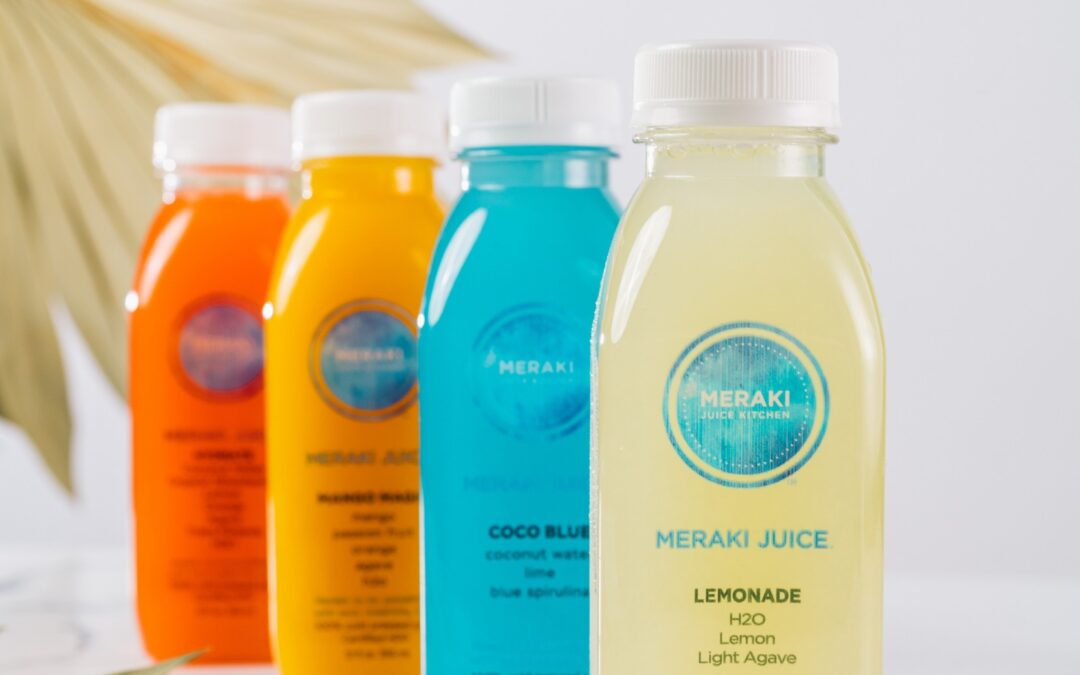
Cold pressed orange juice (often written cold-pressed) is orange juice pressed without heat. It is either served fresh and untreated, or bottled and treated with high pressure processing (HPP) instead of heat. Most juice sold in the United States is pasteurized, which means it is heat-treated (source). The biggest differences between cold-pressed orange juice and store-bought juice are how it is treated, how it tastes and how long it keeps. For the bigger picture, see our Cold-Pressed Juice Guide.
Cold-pressed vs. store-bought orange juice at a glance
| Fresh-squeezed, by the glass | Bottled cold-pressed (HPP) | Typical store-bought | |
|---|---|---|---|
| Heat | None | None | Usually heat pasteurized |
| Safety treatment | Usually none | High pressure processing | Pasteurization |
| Warning label | Not required when sold by the glass | Not needed once treated | Not needed once treated |
| Flavor | Brightest and most like fresh fruit | Fresh-tasting | Consistent from bottle to bottle |
| How it keeps | Shortest; keep cold and drink soon | Refrigerate; follow the date on the bottle | Follow the date on the package |
What “cold-pressed” means (and what it doesn’t)
“Cold-pressed” describes how juice is extracted. Produce is pressed rather than spun with fast blades. It is not a safety step on its own, which is why bottled cold-pressed juice is often treated with HPP. Our guide to what cold-pressed juice is explains the process in more detail.
Cold-pressed does not automatically mean more nutritious. A 2019 study comparing cold-pressed and centrifugal juicing of fresh juices found no significant differences in vitamin C, phenolics, carotenoids or antioxidant capacity. The same study saw juice quality decline in refrigerated storage after day 5 (source).
What the FDA requires
- A 5-log reduction. Juice processors must achieve at least a 100,000-fold decrease in the most resistant harmful microorganism likely to be in the juice. Heat is common, high pressure is an accepted alternative, and citrus processors can also use surface treatments of the fruit as part of their approach (source).
- A retail exemption. Businesses that only provide juice directly to consumers are not covered by those rules. Selling to other businesses brings them back in.
- Warning labels for untreated packaged juice. Untreated packaged juice must say it has not been pasteurized and may contain harmful bacteria. Juice sold by the glass at juice bars, farmers’ markets and some restaurants is exempt (source).
- Percent juice on drinks. A beverage that contains juice must declare how much, for example “Contains 50 percent orange juice,” near the top of the information panel (source).
Vitamin C in orange juice
Orange juice is well known for vitamin C. The NIH Office of Dietary Supplements lists about 93 mg in 3/4 cup of orange juice and about 70 mg in a medium orange. Adults need 90 mg a day (men) or 75 mg (women), and smokers need 35 mg more (source).
The same fact sheet notes that vitamin C in food can be reduced by prolonged storage and by cooking, because it is water soluble and destroyed by heat. Whichever style you buy, fresh-tasting juice kept cold and enjoyed within its date is a good habit.
What about fiber?
Pressing separates juice from the whole fruit, and the whole fruit is what brings fiber. The American Academy of Pediatrics notes that whole fruits also provide fiber and other nutrients (source). The 2025-2030 Dietary Guidelines for Americans recommend eating whole fruits in their original form and say 100% juice should be consumed in limited portions or diluted with water (source). Enjoy orange juice in a small glass and keep whole oranges on the menu too.
How to choose orange juice
- Read the name and percent juice. “100% juice” and “orange drink” are different products.
- Scan the ingredients and added sugars. The FDA counts sweeteners, syrups and concentrated fruit juices as added sugars (source).
- Check the treatment. Look for pasteurized or HPP, or the untreated juice warning statement.
- Look at the date and storage. Cold-pressed juice belongs in the fridge. Our guide on how to store cold-pressed juice has tips.
- Pick for flavor. Straight orange juice is classic, while blends pair orange with other fruit.
Safety note
The FDA says children, older adults, pregnant women and people with weakened immune systems risk serious illness from untreated juice, so pasteurized or HPP-treated juice is the safer pick for them (source). Also check your medications. The FDA notes that Seville oranges, pomelos and tangelos might act like grapefruit juice with some drugs, and that orange juice may lower how much fexofenadine (an allergy medicine) enters the blood. Ask your doctor or pharmacist if you are unsure (source).
Frequently asked questions
Is cold-pressed orange juice pasteurized?
Not with heat. Bottled cold-pressed juice is usually treated with high pressure processing instead. Fresh-squeezed juice served by the glass is often untreated.
Is cold-pressed orange juice healthier than regular orange juice?
Both provide vitamin C, and research on juicing methods has found little difference in measured nutrients. The clearest differences are flavor, freshness and how the juice is treated.
How long does cold-pressed orange juice last?
It depends on the product and how it was treated. Keep it refrigerated and follow the date on the bottle.
Does Meraki sell cold-pressed orange juice?
We do not sell a straight orange juice. Orange is one ingredient in three of our fruit juices: Passion, Hydrate and Mango Magic.
Love citrus? Try ours
Our cold-pressed juices are made in our West Palm Beach kitchen, are Certified HPP, and ship nationwide.
- Passion: pineapple, strawberry, pear, apple, orange and trace minerals.
- Hydrate: coconut water, strawberries, lemon, orange, agave, trace minerals and water.
- Mango Magic: mango, passion fruit, orange, agave and water.
Prefer something greener? Read our green juice guide to compare Clarity, Abundance and Vitality.
Keep reading: explore every article in our Cold-Pressed Juice Guide.
This article is for general information and is not medical advice. Talk with your health care provider before making changes to your diet, especially if you are pregnant, breastfeeding, or taking medication.