
Wholesale cold pressed juice is bottled juice that a kitchen or distributor sells to businesses, such as hotels, spas, studios and cafés, to serve or resell. The right supplier can show that its juice meets the FDA’s 5-log pathogen reduction requirement (usually through high pressure processing or pasteurization), gives you clear ingredient and allergen labels, and delivers cold and on schedule.
This guide is part of our Wholesale Buyer Guides for F&B directors, spa and studio owners and café operators in the Palm Beach area. It covers what to ask, how wholesale juice distributors compare with buying direct from a kitchen, and how to sell juice once it lands in your cooler. If you need a refresher on the product itself, start with what cold-pressed juice is and how HPP works.
Why businesses stock cold-pressed juice
Guests and members increasingly plan trips and routines around feeling good. The Global Wellness Institute reports that wellness tourism expenditures reached $894 billion in 2024 (source). Offering fresh, plant-based drinks at the café counter, the pool bar and the studio front desk is a simple way to welcome those guests.
The practical reasons matter just as much:
- No prep labor. Bottled juice goes from delivery to cooler to guest.
- A real alternative to soda. Fruit and vegetable juices give non-coffee drinkers something to choose.
- Plant-based options. Cold-pressed juice is dairy free, so it suits guests who avoid dairy.
- Easy add-ons. Small wellness shots and snacks sit well next to the register.
What to ask a wholesale juice supplier
1. How is the juice processed?
This is the first question for a reason. Under the FDA’s Juice HACCP rule, juice sold to other businesses must be processed to achieve a 5-log (100,000-fold) reduction in pathogens, using heat pasteurization or an alternative such as high pressure. The retail exemption applies only to operators selling directly to consumers (source). Untreated juice can carry harmful bacteria (source), so ask each supplier how they meet the requirement and ask to see documentation. Meraki’s juices are Certified HPP.
2. What is in each bottle?
Ask for full ingredient lists, and read them. Some juices are pure pressed produce; others include water or a sweetener. Our Clarity is all greens with lemon, for example, while Ginger-Aid is ginger, lemon, light agave and water. Neither is wrong, but you should know which is which before you write a menu description.
3. How are allergens labeled?
The FDA recognizes nine major food allergens: milk, eggs, fish, crustacean shellfish, tree nuts, peanuts, wheat, soybeans and sesame. Packaged food labels must name them either in the ingredient list or in a “Contains” statement (source). Plant-based does not mean allergen-free, so ask for allergen information on every juice, shot and snack you plan to carry.
4. How are products dated?
Ask what the date on the bottle means, how many days of code remain when product arrives, and how the supplier handles short-dated deliveries. Your order sizes should follow how fast you actually sell through.
5. How is the cold chain protected?
Ask how product is kept cold from production to your door, who puts it away, and what happens if a delivery arrives warm. A great juice handled poorly is not a great juice.
6. Delivery reliability and minimums
Ask about delivery days, order cut-off times, substitutions when an item is short, and order minimums. These vary widely between suppliers, so get them in writing.
7. How broad is the range?
One supplier who can cover juices, wellness shots, gluten-free baked goods and snacks can mean fewer deliveries to receive and fewer invoices to reconcile.
Wholesale juice distributors vs. buying direct from the kitchen
| Factor | Wholesale juice distributors | Direct from the kitchen |
|---|---|---|
| Product range | Many brands in one order | One maker’s lineup, often including shots and snacks |
| Path to your cooler | Product may pass through a warehouse first | Shorter path from production to delivery |
| Product knowledge | Reps cover many brands | You talk with the people who make it |
| Delivery reach | Often wider regional coverage | Usually a defined local area |
| Pricing | A distributor margin is typically built in | No middle layer, but ordering is limited to one maker |
| Best for | Multi-brand programs across many locations | Local businesses that want freshness and a direct contact |
Many operators use both: a distributor for shelf-stable basics and a local kitchen for fresh cold-pressed juice and baked goods.
How to merchandise cold-pressed juice
- Put the cooler where people pause. Near the register, the studio exit or the market checkout works better than a back corner.
- Keep it at eye level and faced. Labels forward, colors grouped, greens next to fruit-forward blends so guests can compare.
- Rotate first in, first out. Move older dates to the front when you restock.
- Keep it cold. The FDA advises keeping refrigerators at or below 40°F (source); follow your local health code for commercial cold holding.
- Pair on purpose. Set wellness shots like the Meraki Wellness Shot at the register, and place gluten-free cookies or banana bread beside the juice.
- Describe flavor and ingredients, not health promises. “Pineapple, strawberry, pear, apple and orange” sells Passion honestly.
For outlet-by-outlet ideas, see our guides to juice and wellness shots for hotels and resorts, refreshments for spas and studios and gluten-free baked goods for cafés.
How wholesale ordering with Meraki works
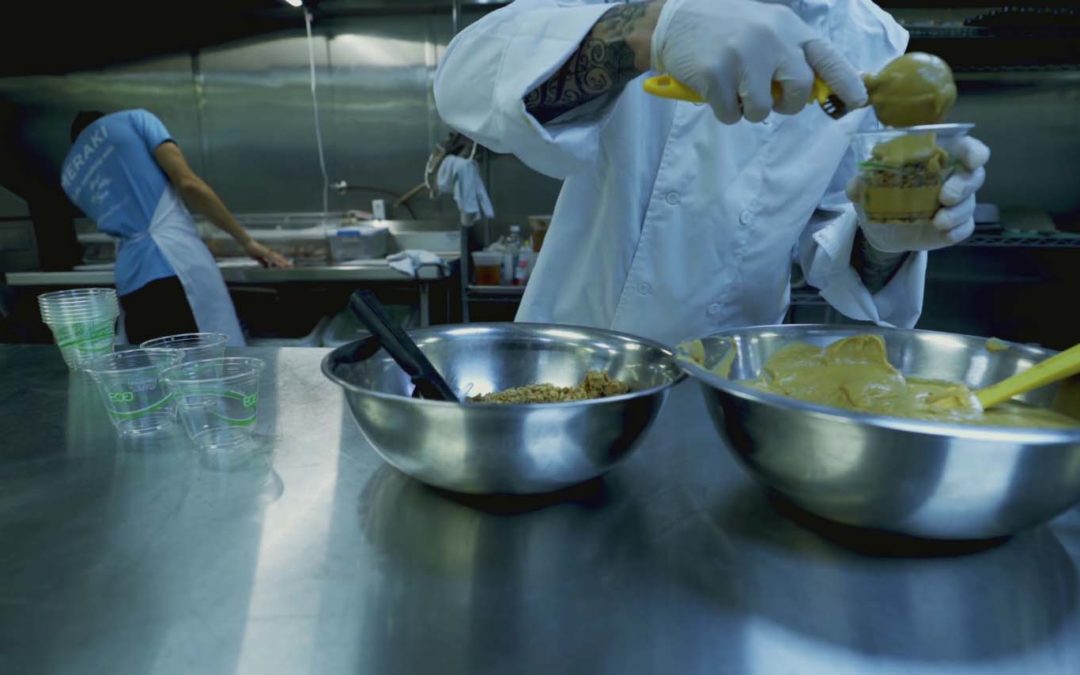
Meraki Juice Kitchen operates a 5,000 sq ft commercial kitchen in West Palm Beach, opened in 2015. The facility is 100% plant based, gluten free and dairy free, and we use organic and locally sourced ingredients whenever possible. We deliver cold-pressed juices, tonics and wellness shots, and gluten-free, dairy-free baked goods and snacks to hotels, spas, fitness, yoga and pilates studios, coffee shops and private clubs in the Palm Beach area.
- Email Maryanne with your business type, your outlets and the products you are interested in.
- Contact us for delivery area, minimums and pricing.
- Try products first by ordering from our online shop, which ships nationwide Monday through Wednesday.
FAQ
Does wholesale juice have to be pasteurized?
Juice sold to other businesses must meet the FDA’s 5-log pathogen reduction requirement. Heat pasteurization is one way; high pressure processing is an accepted alternative (source).
What is the difference between wholesale juice and retail juice?
The product can be the same. Wholesale juice is sold to a business in larger quantities to serve or resell, while retail juice is sold directly to the person drinking it.
Should I use a distributor or buy direct?
Distributors make sense for many brands across many locations. Buying direct from a local kitchen gives you a shorter path to the cooler and a direct line to the maker.
What are Meraki’s wholesale minimums?
Minimums, delivery area and pricing depend on your business. Email Maryanne and she will walk you through them.
Stock Meraki cold-pressed juice at your business
Ready to add wholesale cold pressed juice, wellness shots or gluten-free bites to your menu? Visit our wholesale page or email maryanne@merakijuicekitchen.com. Want to taste first? Order a few bottles from our online shop. For more planning help, browse all of our Wholesale Buyer Guides.